


IndiGo OK to Board: UAE Rules & Required Documents
Check IndiGo OK to Board requirements for UAE flights, including passport categories, visa documents, exemptions, and confirming clearance before departure.
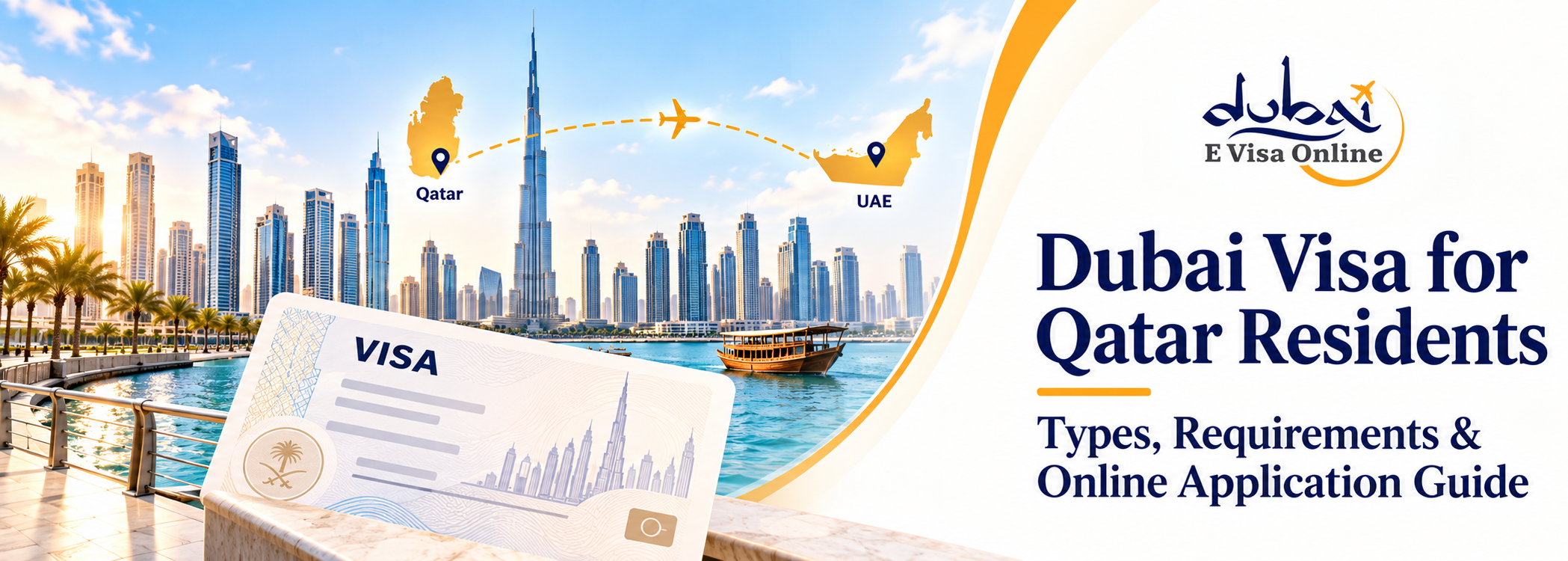
If you live in Qatar as a foreign resident and want a Dubai visa from Qatar, there is no single answer. The Dubai visa for Qatar residents depends on two separate facts: the passport you hold and the residence permit you hold in Qatar. Some travellers can enter on their passport alone. Others can use a route built for GCC residents. Others need a standard Dubai visit visa from Qatar arranged in advance.
This guide covers Qatar to Dubai visa options for expats and other foreign residents holding a Qatar ID. It is about choosing a route, not filing an application. When you are ready to apply, you will be pointed to the right page for current fees and forms. Qatari citizens are a different category, covered on our Dubai visa for Qatari citizens page.
| Route | Who it usually suits | Main condition to check |
|---|---|---|
| Passport-based entry (visa-free or on arrival) | Travellers whose passport nationality is eligible | Your passport, not your Qatar residence, decides this |
| GCC resident entry permit | Foreign residents of Qatar (and companions) whose passport does not qualify for the route above | Valid Qatar residence, valid passport, a residence profile that fits the rules |
| Standard Dubai tourist visa from Qatar | Anyone who fits neither route above | Passport, photo, travel details and a sponsor or agency submission |
Read the table from the top. If your passport qualifies for the first route, you may not need anything else. If not, check the second route before paying for the third.
Two facts shape every option below, and they should be kept apart.
Passport nationality decides whether you can enter the UAE without a pre-arranged visa. This is true wherever you live. A Qatar residence permit does not change the entry rules attached to your passport.
Qatar residence opens the GCC resident route. The UAE treats residents of GCC countries as a group with their own entry permit. Your residence card does not replace a visa. It is the document that makes you eligible to apply for that permit.
You may see this group described as Qatari residents, expats in Qatar or foreign residents in Qatar. All of these mean the same thing here: you hold a foreign passport and a Qatar ID. If that describes you, this is the right page.
Before comparing routes, write down:
With those answers, the rest of this guide takes minutes instead of hours. Skipping them is the most common reason people pick the wrong route.
Many people search for a “Dubai visa for Qatari citizens”, a “Qatari passport Dubai visa” or Dubai entry requirements for Qatari citizens and land on resident pages by mistake. The terms are not interchangeable, so here is how they differ.
Qatari citizens and Qatari passport holders. Citizens of GCC countries, including Qatar, are not required to obtain an entry permit for the UAE in the way foreign nationals are. That means there is generally no Dubai tourist visa for Qatari citizens to apply for, and so no citizen visa fee, price, application form or document list. Rules can be refined by the authorities, so confirm current entry requirements for Qatari passport holders on our Dubai visa for Qatari citizens page.
“30 day” and “60 day” visas. You may see a 30 day or 60 day Dubai visa mentioned in connection with Qatar. These are not citizen visas. The 30-day figure relates to the GCC resident entry permit described below. The 60-day figure relates to the permit for foreign companions travelling with GCC citizens. If you are a foreign national travelling with a Qatari citizen, that is the case to ask about.
Foreign residents. If you hold a Qatar ID but not a Qatari passport, you are a resident, and the rest of this article is written for you.
Some passports allow entry to the UAE without a pre-arranged visa, either visa-free or with a visa on arrival. Eligibility depends on nationality and sometimes on extra conditions, and the lists are updated by the UAE authorities from time to time. Check the current position through official UAE channels or ask us before you buy tickets.
If your passport qualifies, your Qatar residence is not what makes you eligible. It is simply where you are travelling from. Even so, carry your passport, onward or return ticket and accommodation details, because immigration officers can ask for them. Also check how long your passport must remain valid on arrival, since entry rules often set a minimum.
The UAE offers an entry permit for foreign residents of GCC countries, which includes Qatar. Reported features of this route:
Conditions reported include a valid GCC residence permit, a valid passport, and a recent photo that meets the photo rules. Reported minimum residence validity differs between sources and authorities (some say three months, others one year), so check your own residence expiry against the current wording when you apply. The profession shown on your residence can also matter, because entry can be refused if it differs from what was approved.
This route suits residents whose passport needs a visa but who want a lighter process than a standard visit visa. It is not available to everyone, so test your own documents against the conditions before you rely on it.
If your passport does not qualify for Route 1 and you do not fit the conditions for Route 2, a standard Dubai visit visa is the fallback. This is usually submitted by a sponsor or a licensed agency, with your passport copy, photo and travel details. If you are short of time, see our Dubai express visa page for faster processing options.
Your Qatar residence still helps, because it shows where you live and that you will return, but the visa itself does not depend on it.
Choosing the cheapest-looking route first can backfire if you later learn you do not qualify, so confirm eligibility before paying anything.
These hypothetical examples show how to apply the comparison. They are illustrations, not guarantees about any individual case.
Example 1: Eligible passport, valid Qatar residence. A resident of Doha holds a passport that allows entry without a pre-arranged visa. Route 1 applies. The Qatar residence is useful background but does not decide the outcome.
Example 2: Passport needs a visa, residence is valid. A resident whose passport requires a visa holds a Qatar residence with plenty of validity and a profession that matches the original documents. Route 2 is worth checking first, because it is built for exactly this situation.
Example 3: Residence close to expiry. A resident has a passport that needs a visa, but the Qatar residence expires soon after the planned trip. The reported residence-validity minimums may not be met, so Route 2 may not be available. Renewing the residence first, or using Route 3, may be the practical answer.
Example 4: Profession changed recently. A resident changed jobs and the profession on the new residence differs from the one on older paperwork. Use the current residence for any application and tell whoever submits it about the change, because a mismatch can lead to refusal on arrival.
Example 5: Family travelling together. A resident travels with a spouse and children. The spouse and children hold different passports. Each person’s passport decides whether they use Route 1, while companions on Route 2 need their own supporting documents. Check every traveller individually.
Example 6: Foreign resident travelling with a Qatari citizen. A foreign national joins a Qatari citizen on a trip. This is the case the companion permit is built for, and the permit is reported to carry a longer validity and stay than the resident permit. Ask for current details before applying.
Gather these before you apply. This list covers the Dubai visa documents most routes ask for.
A recent colour photo that meets the photo rules is usually required. For companions, expect extra documents. If a sponsor or agency submits your application, ask for one complete list so you can send everything at once.
Put your passport, residence card, approved permit or visa, tickets and accommodation details in one folder, digital and printed. If anything is questioned, you can answer in seconds instead of searching.
We do not publish a fixed price here, because fees change and differ by route. Instead, here is what moves the total.
Processing time varies by route, by how complete your documents are, and by the speed option you choose. We do not quote a fixed number here, because any figure would go out of date. Plan with margin instead:
If your dates are tight, compare standard timing with the faster options on our Dubai express visa page.
Work out your Doha departure date first, then count backwards. A permit that arrives the night before you fly leaves no room for errors.
If you travel with companions, check whether each person needs a separate application. Collect every traveller’s documents at the start, because one missing item can hold up the whole group. Keep each person’s approved document together with their own passport.
After you submit, keep your application or reference number. You can check progress on our Dubai visa status page. If a result shows a problem, fix it before you travel, not at the airport.
These two terms are often confused. Validity is how long you have to enter the UAE after the document is issued. Permitted stay is how long you may remain after you enter. For the GCC resident permit, both are reported as 30 days, but they start from different dates, so note both.
The GCC resident permit is reported to be extendable once, for an additional fee. Extension fees have been reported as higher than the original entry service in some cases, so decide early whether you might stay longer than the permitted stay. If you think you might, ask about extension costs and timing before you travel, and keep your residence in Qatar valid throughout. Do not overstay while waiting for an answer, because overstaying can bring fines and complications at departure.
A little preparation at the airport avoids most last-minute problems.
On arrival, follow the immigration officer’s instructions and answer questions simply and truthfully. Keep your Qatar residence card accessible, because it supports your status as a GCC resident.
Many foreign residents of Qatar hold Indian passports. The rules above apply to them like anyone else: passport and residence are checked separately.
Visa-on-arrival eligibility for Indian passport holders is tied to specific conditions, so check the current list before assuming it applies to you. Living in Qatar is not, by itself, one of those conditions. If you do not qualify for entry on arrival, the GCC resident route may be available if your Qatar residence and profession meet the conditions. Otherwise, a standard visit visa is the route.
For details written specifically for this group, read our guide to the Dubai visa for Indians living in Qatar.
Visa rules are set by the UAE authorities and can change. Confirm the current requirements for your passport and residence before you book or travel.
Your email address will not be published. Required fields are marked *
Processed in 24–48 working hours — transparent fees and expert support.


Check IndiGo OK to Board requirements for UAE flights, including passport categories, visa documents, exemptions, and confirming clearance before departure.
Review Air Arabia OK to Board requirements for UAE travel, including visa documents, submission channels, airline fees, and timing before your flight departs.

Know about Dubai Freelance Visa; Review eligibility, itemised costs, renewal fees, and documents before choosing your application route.


