


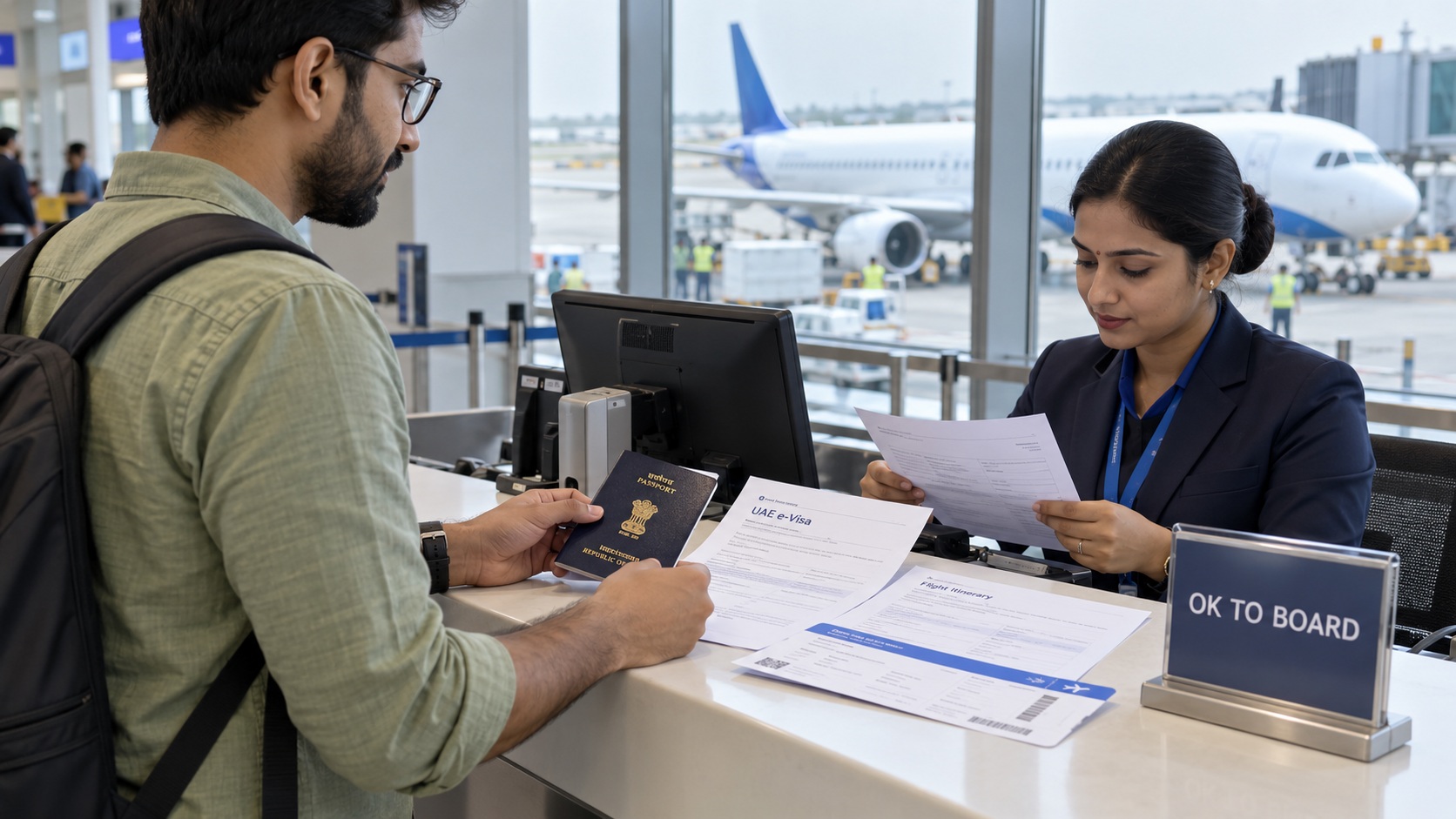
IndiGo OK to Board: UAE Rules & Required Documents
Check IndiGo OK to Board requirements for UAE flights, including passport categories, visa documents, exemptions, and confirming clearance before departure.
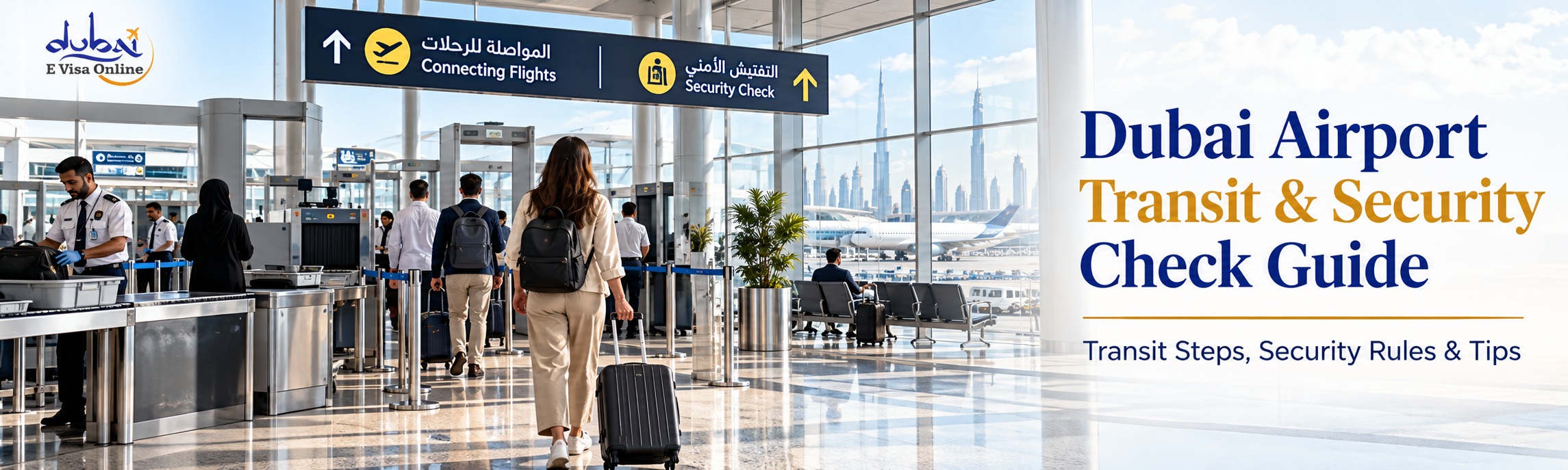
Dubai International Airport (DXB) is one of the busiest connecting hubs in the world, and many of its passengers never leave the terminal. They land, follow the signs to their next flight, pass through a security checkpoint, and board again. If you have a connection in Dubai coming up, knowing what happens between those two flights helps you avoid stress and missed connections. This guide explains Dubai airport transit procedures from landing to boarding. It covers what the security checks involve, what happens to your hand and checked baggage, when immigration checks apply, which documents to carry, and how much time to allow. It also explains what changes if you plan to leave the airport during a long layover.
Airport procedures, scanner technology, and visa rules change from time to time. Treat this as a practical guide, and confirm anything that affects your ticket with your airline before you travel.
If you connect through Dubai on a single ticket and stay inside the airport, the process usually looks like this:
Your checked bags are normally sent through to your final destination automatically, and you usually do not go through passport control because you never formally enter the UAE. There are important exceptions, covered below. Separate tickets, a layover long enough to leave the airport, and changes of terminal all change what you need to do.
“Transit” covers three different situations, and the rules differ for each.
Airside connection. You arrive on one flight and leave on another, staying in the secure transit area. This is the simplest case and the one most travellers have.
Layover where you leave the airport. You go through immigration to rest at a hotel or see the city, then return for your onward flight. This requires permission to enter the UAE.
Self-transfer on separate tickets. Your two flights are booked independently, so your bags are not checked through. You usually need to collect your luggage, which means entering the UAE, and then check in again. This is the case that causes the most missed connections.
| Situation | Enter the UAE? | Immigration check | Checked bags | Security screening |
|---|---|---|---|---|
| Airside connection, single ticket | No | Generally not required | Sent through to your final destination | Transfer security at the airport |
| Layover where you leave the airport | Yes | Required on arrival and on departure | Usually through-checked, or collected if you choose | Normal departure screening when you return |
| Self-transfer, separate tickets | Yes | Required, to collect your bags | Collect, then re-check with the second airline | Full departure screening again |
Entry permission depends on your passport. Confirm with your airline before you travel.
Requirements depend on your nationality, your ticket structure, and whether you plan to leave the airport.
Carry these in your hand baggage, not in checked luggage:
Airlines check your documents for the destination, and some check them for the transit country too. A missing visa for your final destination can stop you at the check-in desk before you reach Dubai.
If you stay in the airport’s transit area and your bags are checked through to your final destination, you generally do not need a UAE entry visa. If you want to leave the airport, you need permission to enter the UAE. Depending on your passport, that could be visa-free entry, visa on arrival, or a pre-arranged visa.
For long connections, the UAE offers 48-hour and 96-hour transit visas, normally arranged in advance through the airline you are flying with. Emirates says it issues them only for travel on Emirates tickets outbound from Dubai. Fees and conditions differ by airline and change over time, so confirm current terms on your airline’s website instead of relying on a figure from a third-party site.
Some airlines will not let you board your first flight without proof of onward travel. On a single booking this is automatic. If you have two separate bookings, keep both confirmations on your phone or in print.
After you leave the aircraft, look for signs reading “Flight Connections,” “Transfers,” or “Transit.” Do not follow signs for “Arrivals,” “Passport Control,” or “Baggage Claim” unless you intend to enter the UAE. Following the wrong signs is how some passengers end up at immigration by accident.
Before you reach the departure area, you pass through a security checkpoint. This applies to everyone, including passengers connecting on the same airline.
Gate information is shown on the flight information screens. Keep checking, because gates can change. Some gates are a long walk from the transfer area, and some need a train or shuttle within the terminal.
Once you have your gate, you can rest, eat, shop, or work until boarding opens. Gates close before departure, so arriving late can mean losing your seat even if the aircraft is still on the ground.
Security screening for transit passengers at Dubai follows the same principles as at most major international hubs. The aim is to make sure everyone in the departure area has been screened, wherever their journey began.
All passengers connecting through DXB pass through security screening before reaching the departure gates. You cannot complete this step online or in advance. It is a physical check at the airport.
Dubai applies international security standards, and officers follow set procedures. For most travellers the checks are routine and move quickly when you are prepared. Delays usually come from liquids packed in the wrong place, electronics left in bags when they should be out, and pockets not emptied before the front of the queue.
Transfer checkpoints sit between the arrival side and the departure area, so you pass through one on the way to your gate. Passengers starting their journey in Dubai use separate checkpoints at the departure hall. The layout depends on the terminal and your arrival gate, so follow the signs and the staff directing passengers.
Hand baggage screening is where travellers most often have questions, because the rules are changing.
UAE airports have long applied the standard international rule on liquids, aerosols, and gels in cabin baggage. Containers must be 100ml or smaller and packed together in a clear, resealable bag. Laptops and large electronics are usually taken out of bags and placed in trays.
Dubai Airports has been rolling out advanced 3D scanners to replace older equipment. These scanners let travellers keep electronics and liquids inside their bags, and the rollout began in 2025. A report from August 2026 says the rollout is continuing, with the goal of eventually replacing all older equipment.
In practice, the rule you face depends on the lane and machine you are directed to. Look for signage, listen to the officers, and follow the instructions at your checkpoint. Until the new machines are everywhere, pack as though the older rules apply.
| Item | Traditional lanes | Newer 3D scanner lanes | What to do |
|---|---|---|---|
| Laptops and tablets | Usually removed and placed in a tray | May stay in your bag | Keep them easy to reach until you see which lane you are in |
| Liquids, gels, aerosols | Containers of 100ml or less, in a clear resealable bag | May stay in your bag | Pack in 100ml or smaller containers as a safe default |
| Shoes and belts | May need to be removed | May not need to be removed | Wear slip-on shoes and put pocket items in your bag |
| Duty-free liquids | Keep in the sealed security bag, with the receipt visible | Same | Do not open the bag before your onward screening |
| Items flagged on the scan | Secondary check by an officer | Secondary check by an officer | Cooperate and follow the officer’s instructions |
Lane equipment varies by terminal and checkpoint. Follow the signs and staff instructions at your checkpoint.
What happens to your checked luggage depends on how your tickets were booked.
Single ticket or single booking. Your bags are normally tagged to your final destination at your origin airport, so you do not collect them in Dubai. Check the tag at check-in to make sure it shows your final destination code rather than Dubai.
Separate tickets. Your bags are tagged only to Dubai. You will need to go through immigration, collect your bags, check in again for your onward flight, and clear security again. This takes much longer than a through-checked connection and requires permission to enter the UAE.
If your bag does not arrive. Report it to your airline’s baggage desk before leaving the baggage area, and keep your baggage tag and boarding passes.
Most transit passengers do not go through passport control, but identity checks can still happen.
You go through immigration if you leave the airport on a layover, self-transfer and need to collect your bags, or otherwise enter the UAE.
Even if you stay in the transit area, your boarding pass and passport may be checked at the transfer desk or the gate. Airlines are responsible for confirming that you have the right documents for your destination, so keep your passport ready throughout.
Dubai uses biometric systems and smart gates at its immigration areas for eligible passengers. These apply to people entering or leaving the UAE, so they are generally not part of a standard airside transfer.
DXB has three passenger terminals, and your terminal depends on your airline and route. Emirates operates mainly from Terminal 3, while other airlines use Terminals 1 and 2. Check your boarding pass or airline app.
Same terminal. The transfer is usually straightforward: follow the connection signs, clear security, and walk or take an in-terminal train to your gate.
Different terminals. Allow extra time. Your airline may provide transfer arrangements, and there are shuttle and public transport options between terminals. Confirm with your airline how the transfer works for your itinerary, because it may involve screening again at the other terminal.
One ticket, two airlines. The airlines will usually handle baggage and tell you which terminal and process applies. Check your booking details.
Airlines set their own minimum connection times, and booking systems normally will not sell a through ticket below that minimum. But the minimum is a floor, not a comfortable margin.
A typical connection includes leaving the aircraft (10 to 20 minutes depending on your seat), walking to the transfer area, queueing at security, travelling to your gate, and arriving before the gate closes. Busy periods, such as morning and evening banks of connecting flights, can mean longer queues.
| Connection type | Suggested buffer | Main risk | Tip |
|---|---|---|---|
| Single ticket, same terminal | About 90 minutes to 2 hours | Late arrival at the gate | Note your boarding time, not the departure time |
| Single ticket, different terminals | More than the same-terminal buffer | Terminal transfer plus a second screening | Ask your airline how the transfer works |
| Single ticket, two airlines | About 2 hours or more | Baggage or gate changes | Check the tag shows your final destination |
| Separate tickets (self-transfer) | Often 3 to 4 hours or longer | Missed connection, with no automatic rebooking | Avoid tight timings and keep both bookings accessible |
| Long layover, leaving the airport | Allow extra time to return | Immigration and departure queues on return | Arrive back well before check-in and gate closing |
These are planning figures, not official rules. Airlines set their own minimum connection times.
If you have a long wait in the transit area, you have several options:
Keep an eye on the screens for your gate and boarding time, even while resting. Set an alarm on your phone based on boarding time, not departure time.
If you leave the airport, you have two sets of checks to plan for.
On the way out. You pass through immigration, where officers check your passport and your permission to enter. Make sure your visa or entry permission is valid before you leave the transit area.
On the way back. You go through the normal departure process: check-in if required, exit immigration, and security screening. This is the same as for any passenger departing Dubai, so arrive well ahead of your flight, not just in time for the gate.
Following the wrong signs. “Arrivals” and “Baggage Claim” lead to immigration. Stay on the “Connections” path unless you mean to enter the UAE.
Booking separate tickets on a short layover. If your first flight is delayed, you may lose your connection, and the second airline may not rebook you.
Packing liquids in the wrong place. Keep them accessible until you know which scanner you will use.
Not rechecking the gate. Gates change, and a long walk can take longer than expected.
Ignoring boarding time. The gate closes before departure, so treat boarding time as your real deadline.
Assuming visa rules. Requirements for the UAE and for your final destination depend on your nationality. Check them before you book.
Transit in Dubai is routine for most travellers, and the process is straightforward when you know what to expect. Stay on the connections path, be ready for security, keep your documents with you, and give yourself a realistic buffer. Most problems come from separate tickets, tight timings, and assumptions about visas, so check those before you book.
If you plan to leave the airport on a long layover, confirm your entry permission with your airline well before your trip. And if your journey involves a change of terminal or a self-transfer, add extra time. A longer layover is far easier than a missed flight.
Airport procedures, security equipment, and visa rules change. Confirm current requirements with your airline or the official UAE and Dubai Airports channels before you travel.
Your email address will not be published. Required fields are marked *
Processed in 24–48 working hours — transparent fees and expert support.


Check IndiGo OK to Board requirements for UAE flights, including passport categories, visa documents, exemptions, and confirming clearance before departure.
Review Air Arabia OK to Board requirements for UAE travel, including visa documents, submission channels, airline fees, and timing before your flight departs.

Know about Dubai Freelance Visa; Review eligibility, itemised costs, renewal fees, and documents before choosing your application route.


