


IndiGo OK to Board: UAE Rules & Required Documents
Check IndiGo OK to Board requirements for UAE flights, including passport categories, visa documents, exemptions, and confirming clearance before departure.
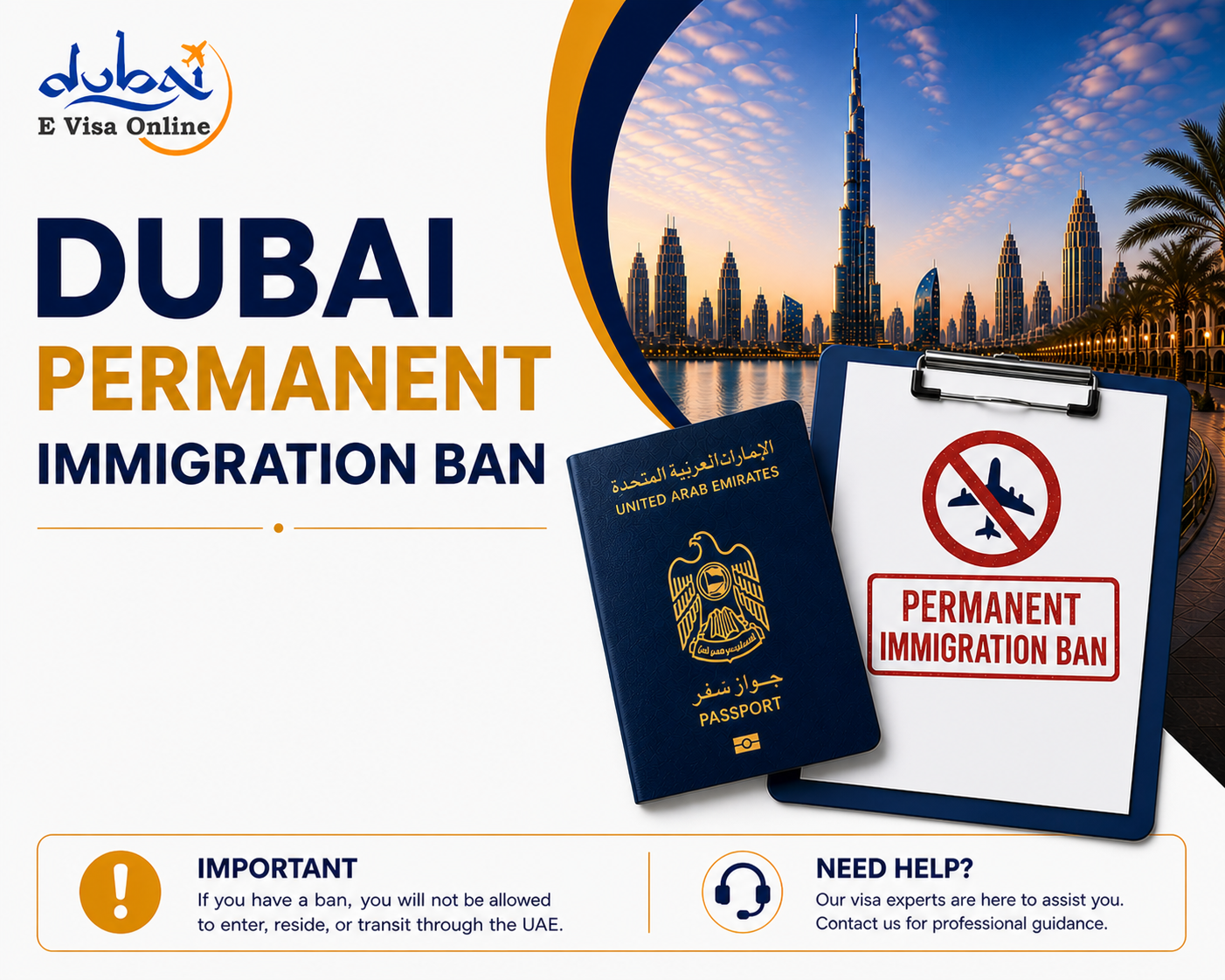
An immigration ban in the UAE is one of the most misunderstood issues faced by travelers, expatriates, and first-time visa applicants. Many people only discover a ban when their Dubai eVisa application is rejected, or when they are denied boarding or entry at the airport.
This guide explains exactly what an immigration ban means, why it happens, how it differs from other bans, and what you can realistically do to check, remove, or work around it safely. If you are planning to visit, work, or transit through the UAE, understanding this topic is critical.
An immigration ban is an official restriction imposed by UAE immigration authorities that prevents a person from entering the country or obtaining any UAE residence or visit visa.
Once an immigration ban is active:
You cannot enter the UAE
You cannot obtain a tourist, visit, or residence visa
You cannot legally live or work in the UAE
This ban applies across all emirates, not just Dubai, and remains active until formally lifted by the authorities.
READ ALSO: DUBAI IMMIGRATION VISA CANCELLATION
An immigration ban directly impacts:
Dubai eVisa approval
Visit visa renewals
Residence visa issuance
Transit permissions in certain cases
Many applicants assume a rejected visa is a technical error. In reality, most unexplained rejections are linked to existing immigration records, even if the applicant has never intentionally violated UAE law.
Understanding the difference is essential.
An immigration ban:
Blocks entry into the UAE
Prevents visa issuance
Applies nationwide
This is the most serious type of restriction.
A travel ban:
Prevents a person inside the UAE from leaving
Is usually linked to court cases, loans, or investigations
Does not always affect future visa eligibility
A labour ban:
Restricts employment for a specific period
Does not stop entry or residency
Commonly applies after contract violations
Immigration bans are typically imposed for legal, security, or compliance reasons, including:
Criminal convictions or serious legal cases
Forged or fake visas, passports, or documents
Drug-related offences
Issued arrest warrants or court judgments
Bounced cheques or unresolved financial cases
Deportation orders issued by UAE authorities
Violations of UAE federal laws
Expulsion from other GCC countries for criminal reasons
READ ALSO: DUBAI IMMIGRATION CLEARANCE AT DUBAI AIRPORT
Applied in cases involving:
Serious criminal offenses
National security concerns
Repeated violations
These bans are rarely reversible.
Issued for:
Legal disputes
Administrative violations
Specific offenses with expiry periods
These bans may be lifted after conditions are met.
Commonly applied to:
Absconding employees
Visa overstayers
Cancelled residency without proper exit
Often resolvable with documentation.
You can check your status through:
UAE immigration records
Authorized representatives inside the UAE
Verified visa service providers during application review
Applying blindly without checking significantly increases rejection risk.
READ ALSO: SHARJAH IMMIGRATION OFFICE
Removal depends entirely on the reason behind the ban.
Bans linked to court cases require:
Case closure
Clearance letters
Official court documentation
If linked to financial disputes:
Full settlement proof
Bank clearance letters
Court acknowledgment
Sometimes bans occur due to:
Name similarity
Passport number errors
These can be lifted through:
Power of attorney
Supporting identity documents
Official correction requests
Deportation bans are case-specific and often permanent unless explicitly lifted by authorities.
READ ALSO: 14 DAYS DUBAI VISA
No.
Any active immigration ban automatically results in visa rejection, regardless of nationality or visa type.
This is why pre-screening and professional verification are essential before applying.
Applying independently without verification can lead to:
Repeated visa rejections
Permanent negative visa history
Loss of visa fees
Increased scrutiny on future applications
Once flagged, recovery becomes significantly harder.
Our professional process includes:
Immigration record validation
Error and blacklist detection
Correct visa category selection
Pre-submission compliance checks
This dramatically reduces rejection risk and protects your travel plans.
READ ALSO: DUBAI VISA FOR US CITIZENS EVERYTHING TO KNOW
Choose the correct Dubai visa type
Submit accurate passport and personal details
Allow professional pre-verification
Complete secure online application
Receive visa approval via email
READ ALSO: DUBAI VISA FOR SOUTH AFRICAN CITIZENS
The UAE maintains strict immigration controls, but many bans are avoidable or resolvable with the right approach. Never assume, never guess, and never apply blindly.
If you are unsure about your status, professional verification is always the safest route.
Your email address will not be published. Required fields are marked *
Processed in 24–48 working hours — transparent fees and expert support.
Check IndiGo OK to Board requirements for UAE flights, including passport categories, visa documents, exemptions, and confirming clearance before departure.
Review Air Arabia OK to Board requirements for UAE travel, including visa documents, submission channels, airline fees, and timing before your flight departs.

Know about Dubai Freelance Visa; Review eligibility, itemised costs, renewal fees, and documents before choosing your application route.


