marine vessel exit permit dubai | rules, process & eligibility

Marine Vessel Exit Permit in Dubai – Rules, Process, Eligibility & Benefits

18-Dec-2025 0 Comments 0 Views

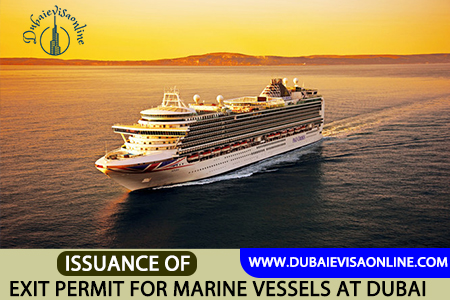
Dubai is one of the most strategically important maritime hubs in the region, handling a wide range of commercial, private, and recreational marine traffic. To maintain safety, security, and regulatory compliance across its ports, marine vessels are required to obtain an official exit permit before leaving UAE territorial waters. This requirement applies regardless of the vessel’s destination and plays a crucial role in maritime governance.

The marine vessel exit permit system has been modernized to reduce processing time, enhance coordination between authorities, and improve compliance monitoring. Vessel owners, operators, and captains who fail to follow the correct procedures may face delays, penalties, or refusal of departure clearance. Understanding how the system works is essential for smooth port operations and uninterrupted voyages.

This guide explains what a marine vessel exit permit is, who must apply, how the process works, and why professional handling matters.


Overview of Marine Vessel Exit Permit in Dubai

A marine exit permit is an official authorization issued by the competent maritime authority allowing a vessel to legally exit UAE territorial waters through designated ports such as Dubai, Fujairah, and Khor Fakkan. The permit ensures that the vessel complies with safety, documentation, and port clearance requirements before departure.

READ ALSO: GDRFA LAUNCHES VIRTUAL HAPPINESS EXHIBITION TO ENHANCE EMPLOYEE HAPPINESS


What Is a Marine Vessel Exit Permit?

A marine vessel exit permit is a regulatory clearance confirming that:

  • The vessel is properly registered

  • Safety and navigation requirements are met

  • Crew and operational details are compliant

  • Port dues and administrative checks are cleared

The permit must be obtained before departure and kept available on board for inspection.


Why Exit Permits Are Mandatory for Marine Vessels

Exit permits are required to:

  • Enforce maritime safety and navigation standards

  • Prevent unauthorized vessel movement

  • Ensure compliance with international maritime conventions

  • Enable coordination between port authorities and maritime security agencies

Failure to obtain an exit permit is considered a regulatory violation.


Authorities Responsible for Issuing Marine Exit Permits

Dubai Maritime City Authority (DMCA) Role

The Dubai Maritime City Authority oversees marine regulations, vessel compliance, and exit permit issuance within Dubai ports.

Coordination With Other Government Entities

Exit permits are processed in coordination with:

  • Port authorities

  • Maritime security units

  • Immigration and residency departments

  • Marine traffic control

This ensures safe and lawful vessel movement.


Improved Exit Permit System for Marine Vessels

Digital Processing and Time Efficiency

Dubai has introduced an electronic system that significantly reduces manual paperwork. Exit permit applications are now processed digitally, cutting approval time and minimizing operational delays for vessel operators.

Vessel Length-Based Processing Rules

  • Vessels below a defined length threshold benefit from simplified procedures

  • Larger vessels follow enhanced compliance checks

  • Existing regulations for large commercial vessels remain unchanged

READ ALSO: RENEWAL OF RESIDENCY VISA FOR FAMILY MEMBERS OF A SPONSOR WORKING IN THE GOVERNMENT SECTOR FREE ZONE


Who Must Apply for a Marine Vessel Exit Permit in Dubai

An exit permit is required for:

  • Commercial ships

  • Private yachts

  • Fishing vessels

  • Recreational marine craft

  • Registered and unregistered vessels

Both vessel owners and shipmasters are legally responsible for compliance.


Step-by-Step Process to Apply for a Marine Exit Permit

Required Documents for Exit Permit

  • Vessel registration certificate

  • Captain and crew details

  • Port clearance records

  • Safety and compliance documentation

Application & Approval Workflow

  1. Submit exit permit request through the authorized system

  2. Upload required vessel and crew documents

  3. Authority review and verification

  4. Approval and issuance of exit permit


Key Advantages of the New Marine Exit Permit System

  • Faster processing and reduced delays

  • Centralized digital records

  • Improved maritime safety oversight

  • Reduced need for in-person port visits

  • Enhanced coordination among authorities


Risks of Non-Compliance or Incorrect Permit Handling

Improper handling of marine exit permits can lead to:

  • Departure delays

  • Port fines or penalties

  • Legal violations under maritime law

  • Vessel detention or clearance refusal

Using unofficial channels or submitting incorrect information increases these risks significantly.

READ ALSO: GDRFA DUBAI TO RECEIVE MEDICAL TEST RESULTS ELECTRONICALLY ONLY FOR VISA PURPOSES


Why Use a Professional Service for Marine Exit Permits

A professional service ensures:

  • Correct documentation and compliance

  • Faster approvals through accurate submissions

  • Reduced operational risk

  • Expert handling of authority coordination

Just as visa processes require precision, marine exit permits demand professional accuracy.


Final Thoughts on Marine Vessel Exit Permits in Dubai

Marine vessel exit permits are a mandatory compliance requirement, not a formality. With Dubai’s advanced maritime infrastructure and strict regulatory environment, vessel owners must ensure every departure is legally authorized. Using a professional service minimizes risk, saves time, and ensures seamless port clearance.

For reliable processing and expert assistance, apply through a trusted Dubai-based professional service and ensure your vessel departs without delays or penalties.

Apply Dubai Visa

  • UAE vessel departure permit
  • DMCA exit permit
  • Port exit clearance Dubai
  • Marine permit UAE

Frequently Asked Questions

If you are visiting Dubai on your yacht and wish to transit through the port of Dubai, you must contact the Dubai Maritime City office as early as possible. There are many things to take into account if you wish to pilot your yacht, such as; you will need to have your yacht's clearance papers in order, as well as your own crew's visas. Your yacht must be inspected by the port authorities and you must have an exit permit. In addition, you will need to hire a pilot and pay a pilotage cost. In Dubai, a pilot is allowed to pilot a private yacht.

Traveling in Dubai is a great experience for everyone. Driving a boat in Dubai requires a license. The marine cruiser license is a document that is issued by the Dubai Marine Department. The first is a temporary license, which is issued to vessels in transit, and the second is a permanent license, which is issued to vessels for use in the marine sector. The temporary license is issued for 90 days upon its validity. The permanent license is issued for a validity period of one year. The license is issued by the marine department when the applicant has fulfilled all the formalities. The marine vessel license is issued at the Dubai marina office. The documents are also verified by the marine department when the license is issued to the applicant.

Traveling across the world aboard a boat may be a great experience. Unless this is an expensive process for many travelers, The United Arab Emirates has had a strong marine sector since the 1920s, with over 12,000 ships registered in the nation. The UAE is the world's third-largest fishing country, as well as the world's seventh-largest ship registration center. Every year, around 2,000 new ships enter its ports. Also, if the traveler is going to be on the sea for several days at a time, he or she will want a large boat.

A commercial tax that is typically levied on transactions with consumers is VAT. It applies solely to business activity or transactions. Meanwhile, it has been noted that some owners of antique yachts are seeking to obtain VAT exemption by stating that their vessels are more than 30 years old. The Dubai Customs Department states that such an exemption for ancient vessels does not exist. In truth, the UAE Customs Departments have been conducting raids on marine boats since January 2014, inspecting all types of cargo, including elderly vessels, to guarantee that all customs duties and taxes are paid in full for any cargo loaded on these vessels.

VAT does not apply to marine vessels that are traded on the second-hand market. VAT applies to vessels that are registered for the first time. VAT is also applicable to boats imported as new boats. VAT applies to boats that are sold with registration as well as boats that are sold without registration. VAT is not applicable on boats sold for repair. VAT is not applicable on boats that are sold for scrap. VAT is not applicable on boats sold for export. VAT is not applicable on boats that are sold for breaking. VAT is not applicable on boats sold for recycling.

Dubai has a visa policy that requires all travelers to get a visa before entering the country. This is due to a large number of expatriates and tourists who enter the country each year and who are expected to maintain a high level of conduct when in Dubai. And if you are a sailor departing from Dubai by air, you do not need a visa. If he is departing by sea, he needs an Exit Permit. An Exit Permit is an official document issued by the Dubai Police. It is a stamp placed in the passport of the person who is being issued the exit permit. The Exit Permit is issued free of charge by the Dubai Police Headquarters. The exit permit is valid for 15 days from the date of issue, and it is valid for one trip only.

The United Arab Emirates is not an excellent port of entry for cruising. If you intend to sail from the UAE to Australia, you should first verify the exit criteria for your home country. With the departure permission, sailing from Dubai to Australia is no longer feasible. It is better to enter the UAE first and then arrange a journey around the Arabian Gulf and the Indian Ocean. It is feasible to obtain a month-long visa if you want to charter a boat in the UAE.

In the United Arab Emirates, the VAT is 5%. The VAT should be paid both by the buyer and the seller. The purchaser must pay the VAT and then get it back afterward. To reclaim the VAT, the buyer must complete a VAT refund form and submit it along with a copy of the bill and the boat's receipt. The refund will be issued the next day. Unless the boat is imported, the buyer is not required to pay VAT on new boats and yachts. In this instance, the buyer must pay VAT to customs and then claim it back later. The buyer will receive the refund in the form of a cheque.

As per the requirements of the UAE Federal Transport Authority, individuals and companies need to take a test to acquire a license. The UAE has a unique system of rules and regulations regarding the waterways and marine traffic within the Emirate of Dubai. The Federal Transport Authority in Dubai has been established to ensure that marine traffic and the flow of vessels within the Emirate of Dubai are following the federal laws and economic goals of the country. The authority has the jurisdiction to grant permits for the operation of boats and vessels inside the Emirate of Dubai.

In the United Arab Emirates, any boat longer than 7 meters requires a boat license. The license is issued by the Dubai Marine City Authority, which is in charge of the registration of all maritime vessels. The size of your boat determines the cost of a boat license. If you acquire a used boat, the cost of the license is determined by the length of the boat. As the length of the boat increases, so does the cost of the license. In recent times, the cost of a marine vessel license in Dubai has become extremely high.

Dubai doesn't have any harbors, which makes it a bit tricky to sail here. If you want to come to Dubai by boat, you will have to anchor your boat outside the territorial waters. Following that, you must get departure permission from the Dubai authorities. Getting your exit permit isn't that difficult, but it can take a few days for the authorities to approve your request. If you want to stay in the sunshine for a couple of days, you can land in one of the beach resorts in Dubai, but you will have to leave the country after a few days because you won't get your exit permit extended.

The VAT paid on a vessel purchase does not represent the full cost of the vessel. VAT is often minimal, and most of the spending is disguised, such as insurance and agency fees. The cost of a vessel includes more than just the vessel's purchase price. It is also the cost of getting it to the market. The VAT paid on the vessel is often refunded. As a result, the VAT paid on the vessel is not a true indicator of the value of the vessel. Business owners are not allowed to claim the VAT back on a boat or any other vessel. The VAT paid on a boat is not recoverable.

Dubai has a massive maritime culture. It is home to the largest fleet of yachts, and the ports of Jebel Ali and Port Rashid are home to the largest fleet of cargo and container ships in the world. There is a strong maritime history in Dubai and the UAE. Before the discovery of oil, Dubai’s economy was largely supported by the pearling industry. This was considered the backbone of Dubai’s economy for several centuries. The first recorded shipment of pearls from Dubai was in 1842.

A VAT-Paid stamp indicates that the yacht has already paid VAT on its purchase price. As a result, when a VAT-paid stamp is affixed to a yacht, the yacht is exempted from paying VAT on its resale. In other words, when a yacht is sold with a VAT-Paid stamp, a new owner does not need to pay VAT on the resale of the yacht.

Due to the lack of ports in Dubai, sailing is more difficult. If you wish to arrive in Dubai by boat, you must anchor outside the territorial seas. Following that, you must get departure permission from the Dubai authorities. The Federal Transport Authority (FTA) recently declared that all marine vessels that have completed their port clearance formalities at Dubai Ports, the Deira Marine Terminal, and Dubai Drydocks are not permitted to leave the Emirate's territorial waters unless they have obtained an Exit Permit from the Authority.

Instead, the yacht was imported by the owner or corporation and then resold to another party. Because of a change in ownership or business, the yacht is now being sold. Most of the time, the yacht is sold to a foreign nation, such as Saudi Arabia, where it is re-registered. However, VAT was not paid on the boat when it was first imported, and it was not paid again when it was resold. The VAT rate in the United Arab Emirates is 5%. However, in the instance of the boat, no VAT was paid at the time of importation or sale. This indicates that the UAE tax authorities will demand the tax be paid. If the boat enters the UAE and is sold without first paying VAT, the owner must pay the 5% VAT to the UAE's tax authorities.

In the UAE, VAT is levied on imported items, including boats. VAT is an indirect tax levied on products and services at various points throughout the supply chain. VAT is levied on the total sale price of a product, which includes the value of imported goods as well as the costs of freight, insurance, delivery, and any other charges such as handling, packing, assembly, and installation. However, the Dubai government has recently issued a decision to levy a tax on the exit of luxury vessels from Dubai's ports. The new tax is similar to the port congestion fee that is levied on commercial vessels. The decision came into effect in 2016 when the exit permit fee is calculated based on the boat's value.

As per international law, it is com practice for countries to impose certain restrictions on foreign nationals operating their own vessels, like commercial and private, in their territorial waters. All countries have their own specific rules and regulations set for foreign nationals operating vessels in their waters. Some countries allow foreign nationals to operate their own vessels in their waters with certain restrictions, and some countries do not allow foreign nationals to operate vessels in their territorial waters. Yachts are the only commercial vessels that can be piloted by their owners, and any pilot can pilot a private yacht.

Write Your Comment

Your email address will not be published. Required fields are marked *